Are There Accessible Introductory AI Courses for Kids? Here's What Parents Should Know
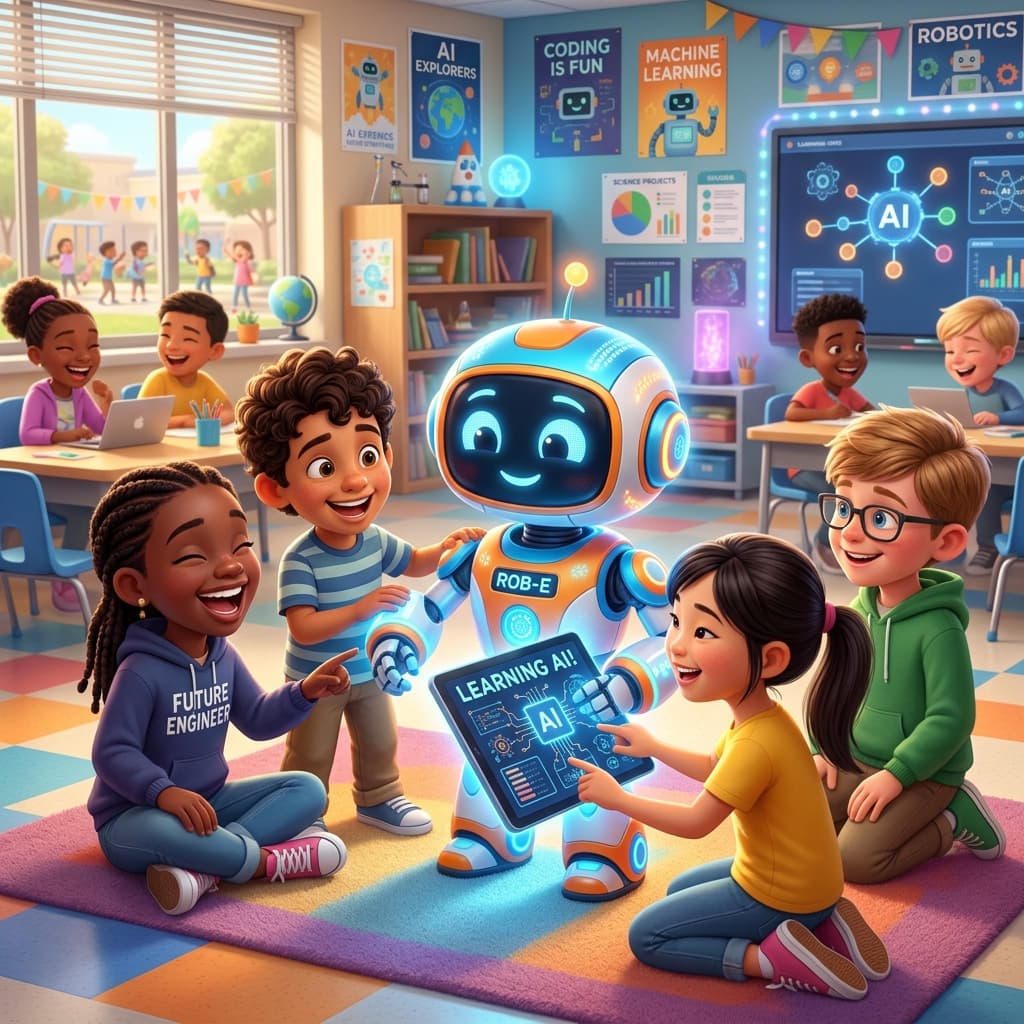
AI is no longer something only engineers and big tech companies deal with. It's already in the tools our children use to search, learn, create, and communicate every day. So it's natural for parents to ask: are there AI courses out there that actually make sense for a child, and not just for adults with a coding background?
The answer is yes. A growing number of platforms and programs now teach AI to young learners through play, storytelling, and hands-on projects rather than syntax and theory. But not every course is worth your child's time, or your money. Age-appropriateness, real practice, and proper instructor support separate the programs that build lasting skills from others.
Why Should Children Learn AI Early?
AI is shaping up to be as foundational as the internet was for the generation before this one. It already sits behind the learning apps, voice assistants, and creative tools children use without a second thought. Teaching them how it works, rather than letting them use it blindly, is the difference between a child who consumes technology and one who understands it.
This isn't about turning every child into a software engineer. It's about critical thinking, creativity, and the confidence to ask better questions. A child who learns to work with AI early is a child who learns to create with it, writing stories, designing artwork, building presentations, instead of just scrolling through a feed. That shift, from consumer to creator, is worth more than any single technical skill.
What actually makes a course "beginner-friendly"
A lot of courses claim to be for beginners and then bury a child in jargon within the first ten minutes. The ones that work do the opposite: they explain ideas through games, relatable examples, and stories, and they don't assume any coding background. A child should be able to walk in knowing nothing and walk out having built something.
Just as important is the learning itself being hands-on. Kids remember what they build, not what they're told. A course worth its cost has children producing things- artwork, chatbots, posters, stories, not just watching a screen. And because kids learn faster with someone to ask questions to, live instructors who can guide, correct, and encourage in real time matter more than any slick curriculum.
Reputable AI Learning Options for Kids
Google, Microsoft, MIT's Scratch, Code.org, and IBM SkillsBuild all offer free AI learning resources for young people, and they're genuinely useful starting points. The catch is that most of them are self-paced, which means a lot of the responsibility for keeping a child engaged falls back on the parent. For a curious teenager who's disciplined about finishing things, that's fine. For most younger children, it isn't.
This is where instructor-led, in-person bootcamps tend to outperform. A child stuck on an idea gets help immediately instead of losing interest and closing the tab. Working alongside other kids builds the kind of teamwork and communication that solo learning can't replicate. And a structured schedule, with a start, an end, and deadlines in between, keeps momentum going in a way that "learn at your own pace" rarely does, especially during the long stretch of a school holiday. In-person programs also tend to strike a better balance between screen time and everything else: discussions, group challenges, presentations, actual conversation.
What to check before you enroll your child
Before signing up, it helps to look past the marketing and ask a few direct questions.
- Does the curriculum genuinely assume zero prior knowledge?
- Are class sizes small enough that your child won't just be one face in a crowd of fifty?
- Are the instructors people who understand both AI and how to teach children, not just adults?
- Will your child walk away with real tools experience, not just a slideshow of concepts?
- Is there a final project or showcase where you can actually see what they built?
- And do other parents say good things about how the program ran, not just what it promised?
A certificate at the end is a nice touch, but it shouldn't be the reason you choose a program. The real value is in what your child can do, and how confident they feel doing it, once the sessions are over.
How the REMOSTART AI Summer Bootcamp Helps Kids Learn AI
The REMOSTART AI Summer Bootcamp for Kids was built around most of what's outlined above. It's designed for children and teenagers aged 7 to 17, no prior coding or AI experience needed, and it treats AI as a creative tool rather than a technical subject to be lectured through.
Across the program, kids use AI to create digital artwork, write original stories, design posters and graphics, and build presentations, all through hands-on projects rather than passive lessons. Team challenges run throughout, so children practice communicating ideas and solving problems together, not just individually. Experienced instructors guide the sessions in person, giving immediate feedback and mentorship rather than leaving kids to figure things out alone.
The bootcamp closes with a final showcase where children present what they've built, and every participant receives a certificate of completion, a small but meaningful marker of the work they put in.
Spaces are limited, and this is shaping up to be one of the more practical ways to spend part of the school holiday. If you've been looking for something structured that turns screen time into actual skill-building, this is worth a closer look before enrollment closes.
Frequently Asked Questions
What age is best to start learning AI?
There's no single right age. Many children start exploring basic AI concepts between 7 and 10 through games and storytelling, then move on to more advanced ideas as they grow. What matters more than age is finding a program pitched at the right level.
Do children need coding experience first?
No. Most introductory courses, including REMOSTART's, are built for complete beginners. Coding can come later if a child wants to go further.
Can AI actually improve a child's creativity?
Used well, yes. Kids can brainstorm, create artwork, write stories, and design graphics with AI; it becomes a tool for expressing ideas, not a replacement for imagination.
Is AI too difficult for a beginner to grasp?
Not when it's taught right. The right course explains AI through simple language and real projects, not technical theory, so children build understanding without feeling overwhelmed.
What do kids actually gain from an AI bootcamp?
Beyond the technical exposure: digital literacy, critical thinking, creativity, teamwork, and the confidence to use AI responsibly- skills that outlast the bootcamp itself.