How to Teach Children AI and Prepare Them for the Future
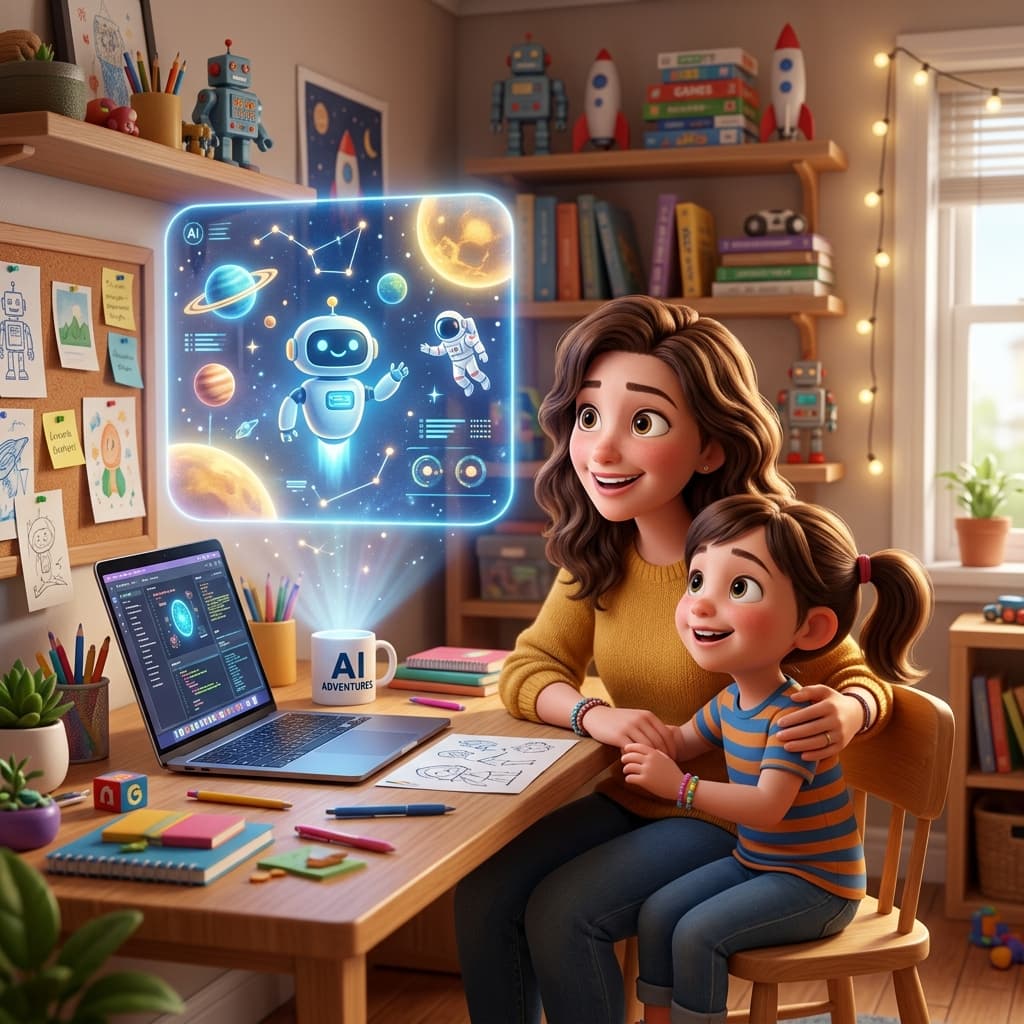
Children are growing up in a world where Artificial Intelligence (AI) is already part of their everyday lives. From YouTube recommendations and voice assistants to smart search tools and educational apps, AI is shaping how they learn, communicate, and consume information.
As AI becomes increasingly integrated into education, business, creativity, and everyday life, research has shown that many parents ask questions like: Should children be learning AI? Is it safe? And how can they be introduced to it in an age-appropriate way?
These are valid concerns. AI is a powerful technology, but when introduced correctly, it can help children develop creativity, problem-solving abilities, communication skills, and digital confidence.
Around the world, schools, educators, and governments are beginning to explore how AI can be integrated into learning. Just as computer literacy became an essential skill over the past few decades, many experts believe AI literacy will become increasingly important for future generations.
What Is AI for Kids?
Artificial Intelligence simply refers to technology that can learn, recognize patterns, solve problems, and generate responses in ways that seem intelligent. For children, AI is not some distant, futuristic concept. They already interact with it every day through:
- YouTube recommendations
- Voice assistants like Siri and Google Assistant
- Translation tools
- Educational apps
- Music and video streaming recommendations
Learning AI does not mean learning complex coding or advanced computer science. Instead, AI education for children focuses on helping them understand how these tools work and how to use them creatively. Children learn how to ask better questions, solve problems, generate ideas, communicate effectively, and create digital projects using AI-powered tools.
In many ways, AI education is less about technology itself and more about developing the ability to think, create, and innovate with technology.
Is There a ChatGPT for Kids?
There is no separate version of ChatGPT designed exclusively for children, but kids can use AI chatbots safely when they are guided by parents, teachers, or trained instructors.
AI chatbots can become valuable learning tools when used appropriately. Children can use them to:
- Write stories
- Brainstorm ideas
- Explore new topics
- Ask questions
- Improve school projects
- Practice communication skills
However, supervision is important. Children should understand that AI is a tool for learning and creativity, not an authority that is always correct. This is why guided learning environments are becoming increasingly valuable. Rather than simply giving children access to AI tools, these environments teach them how to use AI responsibly, creatively, and productively.
Which AI Is Safe for Kids?
There is no single AI platform that is automatically safe for every child. Safety depends on how the technology is introduced and supervised.
Adult Supervision
Children should learn AI with guidance from parents, teachers, or trained mentors. Supervision helps ensure they use AI responsibly and understand how to evaluate information critically.
Age-Appropriate Platforms
Children should use platforms that are suitable for their age and learning level. Educational environments often provide safer and more structured experiences than unrestricted access to AI tools.
Teaching Digital Responsibility
Children should learn:
- Not to share personal information online
- How to verify information from multiple sources
- That AI can sometimes generate incorrect answers
- How to think critically about what they see and read
Structured Learning Programs
One of the safest ways to introduce AI is through supervised workshops and bootcamps. Structured programs provide guided activities, mentorship, collaboration, and hands-on projects that help children develop healthy technology habits while learning practical skills.
How to Teach Your Kids AI (Even If You're Not Tech-Savvy)
You don't need to be a technology expert to help your child learn AI.
Step 1: Show Them AI in Everyday Life
Help children recognize where AI already exists around them. Examples include:
- Search engines
- Voice assistants
- Recommendation systems
- Navigation apps
- Educational tools
This helps them understand that AI is already part of everyday life.
Step 2: Encourage Creativity
Children can use AI to create:
- Artwork
- Stories
- Presentations
- Comics
- Videos
This shifts technology from passive consumption to active creation.
Step 3: Introduce Problem-Solving Activities
Encourage simple challenges such as:
- Designing a poster
- Writing a story with AI assistance
- Creating an animation concept
- Brainstorming solutions to everyday problems
These activities help develop creativity and critical thinking.
Step 4: Enroll Them in an AI Learning Program
Structured programs help children stay engaged, learn alongside peers, and receive guidance from experienced instructors. More importantly, they provide a safe environment where children can experiment, create, and build confidence using AI tools.
Will AI Replace Learning?
One concern some parents have is whether AI will make children overly dependent on technology or reduce their ability to think independently. In reality, when used correctly, AI should support learning, not replace it.
Just as calculators did not eliminate the need to understand mathematics, AI does not eliminate the need for creativity, critical thinking, communication, or problem-solving. Instead, it can help children explore ideas, organize information, and express themselves more effectively.
The key is teaching children to use AI as a tool that enhances learning rather than a shortcut that replaces effort and understanding.
What Children Can Learn in an AI Bootcamp
A structured AI bootcamp helps children move beyond simply using technology and teaches them how to create with it. Participants can learn how to:
- Understand how AI works
- Write effective prompts
- Create AI-generated artwork
- Build stories and comics
- Design posters and presentations
- Create videos and animations
- Work on group innovation projects
- Present their ideas confidently
What Kind of Projects Can Children Create?
One of the biggest advantages of hands-on AI learning is that children leave with tangible projects they can proudly share with parents and friends. For example, participants may create:
- AI-generated artwork and illustrations
- Original stories and comic books
- Posters and awareness campaigns
- AI-assisted presentations
- Short videos and animations
- Creative problem-solving projects
- Team innovation challenges
These projects help children see the practical results of what they are learning while building confidence in their ability to create with technology.
Frequently Asked Questions
Can a 7-year-old learn AI?
Yes. Children can begin learning AI concepts through age-appropriate activities such as storytelling, creativity projects, games, and guided problem-solving exercises.
Does my child need coding experience?
No. AI learning programs for children are often designed for beginners and focus on creativity, communication, and problem-solving rather than programming.
Is AI safe for children?
AI can be safe when introduced in a supervised environment and paired with digital responsibility education.
What will my child gain from learning AI?
Children can develop creativity, confidence, communication skills, critical thinking abilities, and a better understanding of how technology works.